What Your Attic Ductwork Is Actually Doing to Your Bills
The ductwork nobody sees is often the single biggest reason a cooling bill runs high despite a healthy AC unit.
August 25, 2026 · 3 min read
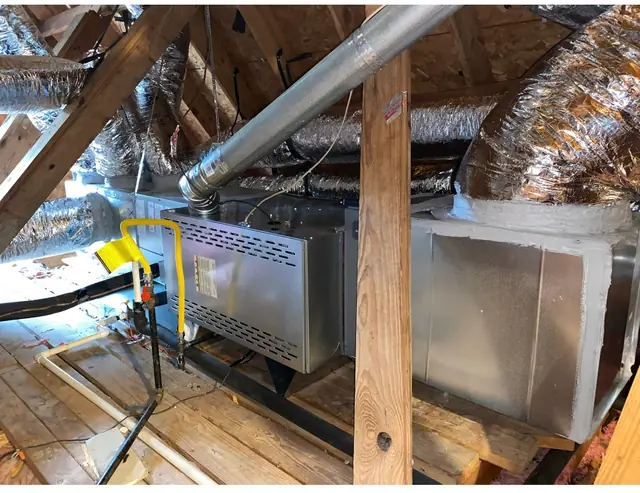
Most Tomball and North Houston homes push cold air through ductwork that lives in the hottest part of the house: the attic. In August that space can run well past 130 degrees. Every foot of duct up there is fighting that heat the whole time it's trying to deliver 55-degree air to a bedroom, and a lot of ductwork is losing that fight quietly, for years, without anyone noticing anything beyond "the bill feels high."
How much air actually leaks
Older or poorly sealed ductwork can lose a meaningful share of the air moving through it before that air ever reaches a vent, through gaps at joints, disconnected sections, or seams that were taped once and never revisited. That's conditioned air the system paid to cool that's now cooling the attic instead of a bedroom. The AC doesn't know the difference. It just runs longer to try to hit the thermostat setting, using more energy to deliver less comfort.
Insulation and ducts are two different jobs
Sealing a duct stops air from escaping through gaps. Attic insulation is a separate layer that slows how much heat gets into the ductwork and the living space in the first place. A house can have great insulation and still have leaky ducts, or tight ducts sitting under poor insulation. Both need to be right for the system to work the way it's rated to.
Signs the ductwork is the actual problem, not the AC unit
- One or two rooms are always warmer than the rest of the house
- The system runs long cycles but the house never quite catches up
- You can hear or feel airflow through unfinished attic space near duct runs
- Energy bills climb even though the AC itself was serviced recently
- Vents in far rooms have noticeably weaker airflow than vents close to the air handler
- Dust or a musty smell shows up around certain vents
Why attics here run hotter than people expect
A dark composition shingle roof in full North Houston sun absorbs a huge amount of radiant heat, and most attics have limited ventilation to move that heat back out. Add the humidity that soaks into roof decking and insulation over a long cooling season, and the attic becomes a genuinely harsh environment for anything sitting in it, ductwork included. Flex duct insulation that's rated to handle normal temperature swings breaks down faster in an attic that regularly tops 130 degrees for months at a stretch, which is part of why ductwork that would last decades in a cooler climate needs earlier attention here.
What a duct inspection actually checks
A proper inspection means someone getting into the attic with a light and actually looking at the runs: connections at the plenum, whether flex duct is crushed or kinked anywhere it turns, whether insulation has slipped off a section, and whether the system was sized right for the house in the first place. Sealing uses mastic or foil tape rated for the job, not the cloth-backed duct tape from a hardware store, which dries out and fails within a couple of Houston summers.
New ductwork versus repair
Sometimes sealing and re-insulating existing runs is enough. Sometimes the ductwork itself was undersized or poorly routed when the house was built or added onto, and a straight repair just patches a design problem. That's a judgment call that needs eyes on the actual attic, not a phone estimate.
Duct leaks and indoor humidity are connected
A leaking supply duct doesn't just waste cold air, it can also pull humid attic air into the house through the negative pressure it creates elsewhere in the system. That's a separate mechanism from the AC's own dehumidification job, and it's one more reason a house can feel muggy even when the thermostat says it's at temperature. Sealing the ductwork properly closes off that path along with the direct air loss, which is part of why duct sealing tends to show up as a noticeable comfort change, not just a smaller number on the electric bill.
Titan Comfort Solutions' NATE-certified techs handle duct inspection, sealing, and full duct installation as part of the same visit that covers the AC itself, so the diagnosis isn't guessing at what's happening above the ceiling. Texas Air Conditioning Class A #119850C. Call (281) 549-2122.
Titan Comfort Solutions. (281) 549-2122
Call (281) 549-2122More articles
Why Your AC Blows Warm Air in Houston's Humidity
Warm air from the vents in July isn't always the compressor's fault, and knowing the difference saves you a wasted service call.
Repair or Replace: When an Old AC System Isn't Worth Fixing
The right call between fixing and replacing usually shows up in the pattern of past repairs more than in any single breakdown.