Why Your AC Blows Warm Air in Houston's Humidity
Warm air from the vents in July isn't always the compressor's fault, and knowing the difference saves you a wasted service call.
August 25, 2026 · 4 min read
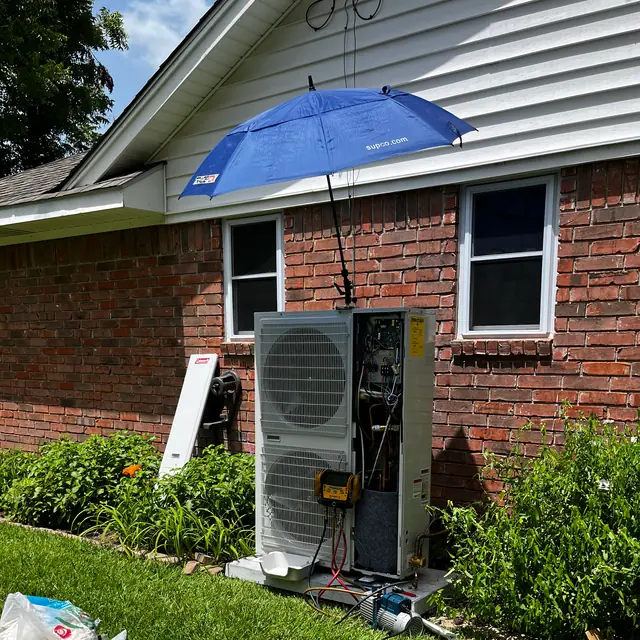
It's 9pm in July and the vents in your Tomball house are pushing air that feels barely cooler than the room. The thermostat says 72 but the air coming out doesn't match it. Before you assume the compressor's dying, there's a shorter list of causes than most homeowners think, and on the Gulf Coast the humidity itself changes which one is most likely.
Why Houston humidity makes this worse
A central AC system does two jobs at once: it lowers the temperature and it pulls moisture out of the air. In a dry climate a system can get away with short run cycles. Here, with dew points that sit in the 70s for months, the system needs long, steady run times to actually dehumidify the house. When something interrupts that steady cycle, whether it's a dirty filter, a low refrigerant charge, or a struggling attic air handler, the air coming out of the vents feels warm and clammy even though the compressor outside is technically running.
The most common causes, in order of likelihood
- A dirty air filter choking airflow across the indoor coil
- Low refrigerant from a slow leak in the line set or coil
- A frozen evaporator coil, which then blows warm air once it thaws
- A failing capacitor that's letting the compressor run but not at full strength
- A blower motor that's turning but not moving enough air through the ducts
Airflow problems versus refrigerant problems
These two failure modes feel almost identical from the couch but they're fixed completely differently. An airflow problem, a filthy filter, a blocked return, a collapsed duct, means the system has plenty of cold refrigerant but nothing to move it through the house. A refrigerant problem means the system doesn't have enough cold to work with in the first place, no matter how hard the blower pushes. A NATE-certified tech tells the two apart with gauges on the line set and a temperature split reading across the coil, not by guessing from how the air feels at the vent.
The rough test a technician actually runs
A working AC system, measured at the vent closest to the air handler, should be pulling air out somewhere around 18 to 22 degrees cooler than the air going into the return. That's the split. If the return side is pulling in 78-degree air and the supply side is only managing 74, that four-degree split is a strong sign of a real fault, whether it's low refrigerant, a dirty coil restricting heat transfer, or a blower that isn't moving enough volume. A healthy split closer to 20 degrees usually means the equipment itself is fine and the complaint is somewhere else, like a duct run losing cold air before it reaches the room.
Short cycling makes the humidity problem worse, not better
An oversized system, or one that's been set to run in short, aggressive bursts, cools the air fast and then shuts off before it's actually pulled meaningful moisture out. The thermostat reads satisfied. The air still feels damp and warm to the skin, because temperature and humidity aren't the same thing and a system that only chases the number on the wall can hit that number without ever running long enough to dehumidify. This is part of why a warm, clammy feeling can show up even when the thermostat isn't reporting anything wrong, and it's a separate issue from the mechanical faults above, worth mentioning to whoever comes out if the house feels muggy even when it's technically at temperature.
When ice on the unit means don't touch it
If you go outside and see ice on the refrigerant lines, or the indoor coil is frosted over, turn the system off at the thermostat and switch the fan to "on" so it can thaw, then call for service. Running a frozen system harder doesn't fix warm air. It makes the coil colder still, ices it up worse, and risks liquid refrigerant slugging back into the compressor, which is a far more expensive repair than whatever caused the freeze in the first place.
What's worth checking before you call
- Filter date, if you can't remember changing it in the last 60 to 90 days, that's the first suspect
- Outdoor unit is clear of leaves, mulch, or anything blocking the fins
- Return air vents inside aren't blocked by furniture or closed doors
- Breaker hasn't tripped and the outdoor fan is actually spinning
If those check out and the air is still warm, it's a refrigerant or component issue rather than a filter issue, and it needs a tech with gauges rather than a trip to the hardware store. Titan Comfort Solutions runs 24/7 live answering, so a warm-air call at 9pm on a Tuesday gets a real person, not a voicemail. Call (281) 549-2122.
Titan Comfort Solutions. (281) 549-2122
Call (281) 549-2122More articles
Repair or Replace: When an Old AC System Isn't Worth Fixing
The right call between fixing and replacing usually shows up in the pattern of past repairs more than in any single breakdown.
What Your Attic Ductwork Is Actually Doing to Your Bills
The ductwork nobody sees is often the single biggest reason a cooling bill runs high despite a healthy AC unit.